The Danger of Familiarity
Have you ever heard a story so often that its weight begins to fade? It’s a danger we don’t often recognize, but it’s real.
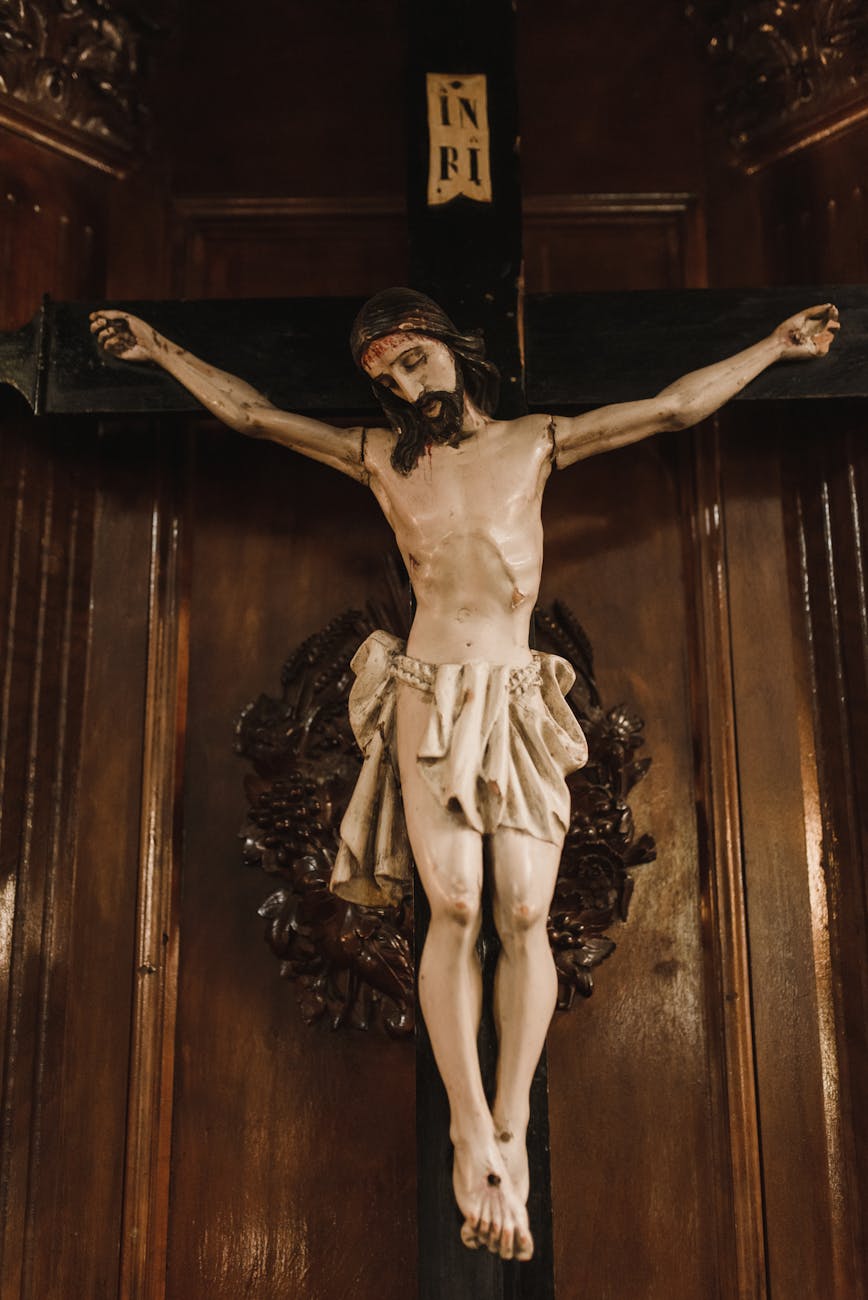
The crucifixion of Jesus Christ is one of those stories. We’ve all heard about the crown of thorns, the flogging, the nails. We’ve seen the paintings, the movies, the dramatizations. And over time, it becomes easy to nod along, acknowledging it without truly feeling the impact.
But the cross was not just an event in history.
It was a moment of unimaginable suffering—physical, emotional, and spiritual. A suffering chosen, not forced. A sacrifice made for the very ones who caused His wounds.
That includes me.
That includes you.
And if we allow ourselves to sit with the full weight of what Jesus endured, we will never look at the cross the same way again.
This is not an easy post to write. It will not be an easy one to read. But some truths should never be softened. Some things are meant to break us, so they can rebuild us.
Let’s look again at what He endured—really look—and remember the price that was paid.
A Father’s Perspective: The Unthinkable Choice
I am a father. I would do anything to protect my children. If they are hurt, my first instinct is to take that pain on myself.
I imagine most parents feel the same. The thought of standing by while my daughters suffered is unbearable. If I could trade places with them, I would in an instant.
But now, imagine not just standing by, but sending your child—your only child—into suffering.
Not just suffering, but brutal, torturous agony.
And not to save the good and the deserving, but to rescue the rebellious, the wicked, the ones who would spit in His face and mock His name.
This is what God the Father did.
He sent His Son with full knowledge of every lash of the whip, every wound, every nail. He knew exactly what Jesus would endure, and He sent Him anyway.
Why?
Because His love is deeper than anything we can understand.
📖 “But God demonstrates his own love for us in this: While we were still sinners, Christ died for us.” — Romans 5:8
The Horrors of the Crucifixion
Jesus was not weak.
He was a carpenter, a man of strength and endurance. Yet He willingly stepped into a suffering so extreme that most of us cannot even begin to comprehend it.
The process began with mocking. Roman soldiers laughed in His face, spit on Him, and struck Him repeatedly. They blindfolded Him and demanded He prophesy who had hit Him. The very people He came to save treated Him like a joke.
Then came the scourging.
Roman flogging wasn’t a simple beating. The flagrum was a whip embedded with pieces of bone, glass, and metal, designed to rip flesh from the body. Victims often died from blood loss before they even reached the cross.
Each strike tore deeper. Flesh shredded. Muscle exposed. Blood poured from His body onto the stone pavement below.
Most men never survived this stage. But Jesus endured.
📖 “They twisted together a crown of thorns and set it on his head. They put a staff in his right hand. Then they knelt in front of him and mocked him. ‘Hail, king of the Jews!’ They spit on him, and took the staff and struck him on the head again and again.” — Matthew 27:29-30
The soldiers shoved a crown of thorns onto His head—thorns as long as three inches, razor-sharp and thick.
They didn’t just place it on His head.
They beat it into His skull with a rod, hammering it down until the spikes punctured deep, cutting through flesh, scraping against bone. Blood streamed down His face, blurring His vision, soaking His beard.
They laughed.
And He remained silent.
The Path to Golgotha: Bearing the Cross
After the scourging, after the crown of thorns was hammered into His skull, after His body had been beaten beyond recognition, Jesus was given His cross to carry.
Not just a wooden beam. Not just a portion of it.
The full, brutal instrument of His execution.
The cross was likely near 300 pounds, a massive structure of rough-hewn wood, designed to prolong suffering. It was placed on His shredded shoulders, reopening wounds, causing fresh waves of agony.
And so, He began His journey to Golgotha. Step by step, weakened beyond measure, He carried the very object upon which He would be nailed.
But the weight of it was too much.
The brutal flogging had drained Him. His body was at its limit. The Roman soldiers saw that He could go no further, and so they forced a man from the crowd—Simon of Cyrene—to carry the cross for Him.
📖 “As the soldiers led him away, they seized Simon from Cyrene, who was on his way in from the country, and put the cross on him and made him carry it behind Jesus.” — Luke 23:26
Scripture does not explicitly say that Jesus collapsed, but the fact that Simon was pressed into service tells us everything we need to know: His body, broken and exhausted, could go no farther under the weight of that cross.
And yet, He never gave up.
Even in the weakness of His human flesh, He kept moving forward. Not once did He resist. Not once did He demand relief.
Because He was thinking of us.
The Moment of Separation: The Worst of It All
Of all the suffering Jesus endured—the savage flogging, the crown of thorns hammered into His skull, the nails driven through His flesh—none of it compared to this moment.
The true agony of the cross was not the physical pain. It was what happened between Jesus and the Father.
At that moment, He was not just an innocent man suffering injustice.
He became sin itself.
The One who had never known a moment apart from the Father, the Son who had lived in perfect unity with Him for all eternity—was forsaken.
📖 “God made him who had no sin to be sin for us, so that in him we might become the righteousness of God.” — 2 Corinthians 5:21
Pause and consider that.
Jesus did not just carry our sins to the cross—He became the embodiment of sin itself.
The weight of every lie
Every betrayal
Every murder
Every act of adultery
Every blasphemy
Every ounce of hatred, pride, and wickedness
The sins of every person who had ever lived and would ever live were placed on Him all at once.
And in that moment, the Father turned away.
For the first and only time in all eternity, Jesus was completely alone.
This was not just emotional despair. This was not just the weight of suffering.
This was hell itself—the total separation from God, the full force of His wrath poured out on Jesus instead of us.
📖 “My God, my God, why have you forsaken me?” — Matthew 27:46
This is the moment that should shake us to our core.
Jesus did not cry out during the scourging.
He did not scream when the nails pierced His hands.
He did not beg for mercy as they hammered thorns into His head.
But now—for the first time—He screams.
Not because of the pain of the cross.
Not because of the agony of His wounds.
But because He has been separated from His Father.
The One He had loved perfectly for all eternity
The One He had obeyed with joy
The One whose voice had never once left Him
Was gone.
This was the full wrath of God unleashed.
The punishment that should have fallen on us—on the liars, the thieves, the murderers, the adulterers, the prideful, the selfish—was poured out on Him instead.
And He bore it willingly.
For us.
He experienced the hell we deserved so that we would never have to.
📖 “For the wages of sin is death, but the gift of God is eternal life in Christ Jesus our Lord.” — Romans 6:23
The True Sacrifice
Many focus on the physical suffering Jesus endured, and while it was horrific beyond comprehension, that was not the true cost of our salvation. His body—His temporary human flesh—was wounded, but the deepest suffering took place in His eternal soul.
For the first time in all of existence, Jesus, who had always been in perfect communion with the Father, experienced separation. The Trinity had never known division, yet in that moment, the Son was forsaken.
This, I believe, was the true sacrifice of Jesus.
Everything else—His flogging, His crucifixion, even His dying breath—was inflicted upon His earthly body. But in that moment of divine abandonment, His eternal soul bore the full weight of God’s wrath.
While Scripture does not explicitly state that Jesus’ soul suffered in this way, it does confirm that He bore the fullness of God’s judgment upon Himself (Isaiah 53:10-11, 2 Corinthians 5:21). It was not just death He endured, but the complete separation from the Father—the very essence of hell itself.
It is a mystery that we may never fully grasp this side of eternity. But one thing is certain: Jesus did not merely die for us. He was forsaken so that we never would be.
The Curtain Torn: The Separation Ended
The moment Jesus breathed His last, something incredible happened.
📖 “At that moment the curtain of the temple was torn in two from top to bottom.” — Matthew 27:51
That curtain separated mankind from the presence of God—a barrier no human could cross. It was God’s way of saying, ‘You are not holy enough to come near Me.’
But now, in that single moment, Jesus had paid the full price.
The separation was over.
Because He was forsaken, we never have to be.
Because He was abandoned, we can be accepted.
Because He bore God’s wrath, we can receive God’s mercy.
What This Means for Us
The cross is not just a story.
It is the single greatest act of love in human history.
📖 “But he was pierced for our transgressions, he was crushed for our iniquities; the punishment that brought us peace was on him, and by his wounds we are healed.” — Isaiah 53:5
We must never become numb to what happened on that cross.
We must never let this become routine.
Let it sink in.
Let it break us.
Let it change us.
A Prayer of Surrender
Father, I am not worthy of Your love. I do not deserve the price Jesus paid. And yet, You gave it freely. Let me never take it for granted. Stir in me a heart that reflects Your sacrifice. I surrender everything to You. In Jesus’ name, Amen.
🔹 Jesus paid it all. Let’s live like it matters.
Leave a Reply